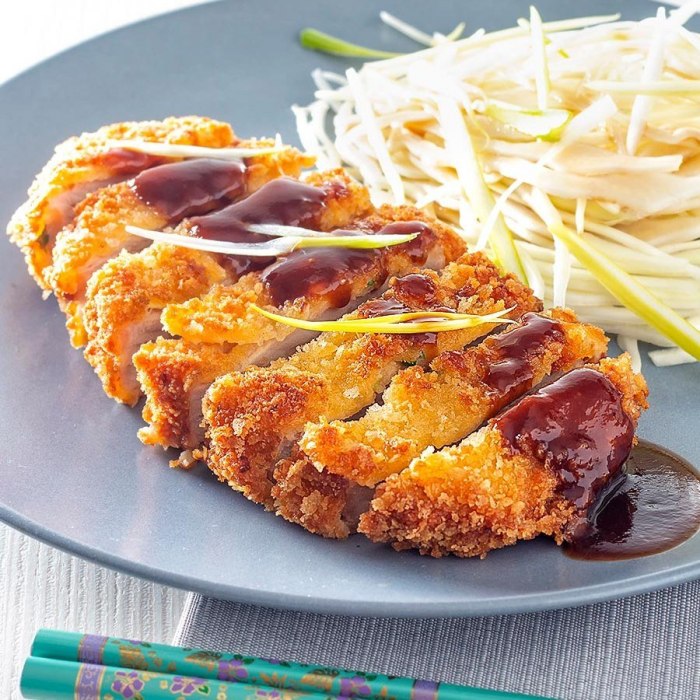
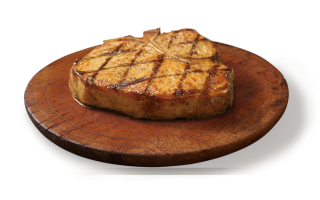
Tonkatsu pork

Ingredientes

4 Pork Chops
100g Flour
2 Beaten Eggs
100g Breadcrumbs
Fry Vegetable Oil
2 tbs Tomato Ketchup
2 tbs Worcestershire Sauce
1 tbs Oyster Sauce
2 tblsp Caster Sugar

Instrucciones

STEP 1
Remove the large piece of fat on the edge of each pork loin, then bash each of the loins between two pieces of baking parchment until around 1cm in thickness – you can do this using a meat tenderiser or a rolling pin. Once bashed, use your hands to reshape the meat to its original shape and thickness – this step will ensure the meat is as succulent as possible.

STEP 2
Put the flour, eggs and panko breadcrumbs into three separate wide-rimmed bowls. Season the meat, then dip first in the flour, followed by the eggs, then the breadcrumbs.

STEP 3
In a large frying or sauté pan, add enough oil to come 2cm up the side of the pan. Heat the oil to 180C – if you don’t have a thermometer, drop a bit of panko into the oil and if it sinks a little then starts to fry, the oil is ready. Add two pork chops and cook for 1 min 30 secs on each side, then remove and leave to rest on a wire rack for 5 mins. Repeat with the remaining pork chops.

STEP 4
While the pork is resting, make the sauce by whisking the ingredients together, adding a splash of water if it’s particularly thick. Slice the tonkatsu and serve drizzled with the sauce.

Categorías
Beef
Carne de Res
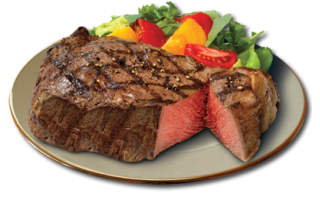
Carne de res es el nombre culinario de la carne de ganado vacuno, particularmente el músculo esquelético. Los humanos han estado comiendo carne de res desde tiempos prehistóricos. La carne de res es una fuente de proteínas y nutrientes de alta calidad. La mayor parte de la carne de músculo esquelético de res se puede usar tal cual simplemente cortándola en ciertas partes, como asados, costillas cortas o bistecs (filete miñón, solomillo, rabadilla, chuleta, ojo de costilla, bistec de falda, etc.), mientras que otros cortes son procesados (carne en salmuera o cecina de res). Los recortes, por otro lado, generalmente se mezclan con carne de ganado más viejo, magro (por lo tanto, más duro), se muelen, se pican o se usan en salchichas. La sangre se usa en algunas variedades llamadas morcilla. Otras partes que se comen incluyen otros músculos y vísceras, como el rabo de buey, el hígado, la lengua, los callos del retículo o rumen, las glándulas (particularmente el páncreas y el timo, conocidos como mollejas), el corazón, el cerebro (aunque prohibido donde existe peligro de encefalopatía espongiforme bovina, EEB, comúnmente conocida como enfermedad de las vacas locas), los riñones y los testículos tiernos del toro (conocidos en los Estados Unidos como sesos de ternera, ostras de la pradera u ostras de las Montañas Rocosas). Algunos intestinos se cocinan y se comen tal cual, pero más a menudo se limpian y se usan como tripas naturales para salchichas. Los huesos se utilizan para hacer caldo de res.