Calculadora de IMC
 Calculadora de Calorías
 Calculadora de Porcentaje de Grasa Corporal
 Calculadora de TMB
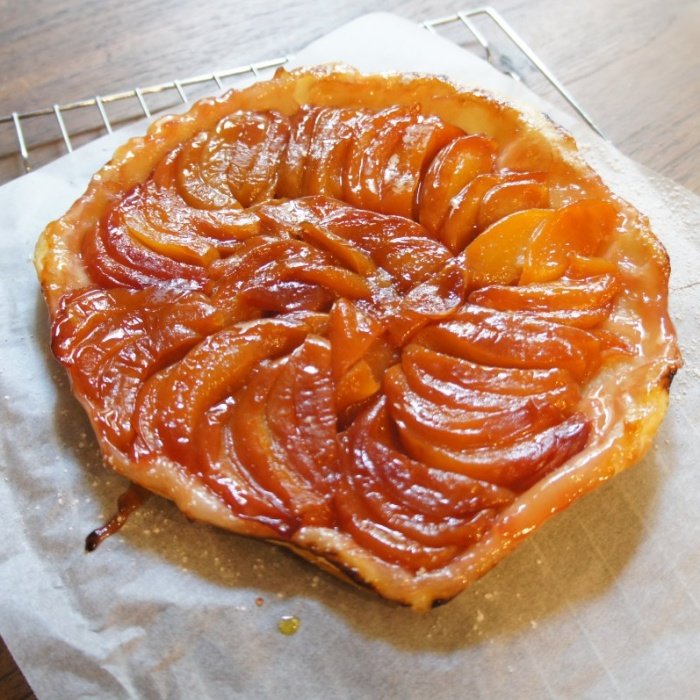
Tarte Tatin
Ingredientes


Instrucciones
Roll the pastry to a 3mm-thick round on a lightly floured surface and cut a 24cm circle, using a plate as a guide. Lightly prick all over with a fork, wrap in cling film on a baking sheet and freeze while preparing the apples.
Heat oven to 180C/160C fan/gas 4. Peel, quarter and core the apples. Put the sugar in a flameproof 20cm ceramic Tatin dish or a 20cm ovenproof heavy-based frying pan and place over a medium-high heat. Cook the sugar for 5-7 mins to a dark amber caramel syrup that’s starting to smoke, then turn off the heat and stir in the 60g diced chilled butter.
To assemble the Tarte Tatin, arrange the apple quarters very tightly in a circle around the edge of the dish first, rounded-side down, then fill in the middle in a similar fashion. Gently press with your hands to ensure there are no gaps. Brush the fruit with the melted butter.
Bake in the oven for 30 mins, then remove and place the disc of frozen puff pastry on top – it will quickly defrost. Tuck the edges down the inside of the dish and, with a knife, prick a few holes in the pastry to allow steam to escape. Bake for a further 40-45 mins until the pastry is golden brown and crisp.
Allow to cool to room temperature for 1 hr before running a knife around the edge of the dish and inverting it onto a large serving plate that is deep enough to contain the juices. Serve with crème fraîche or vanilla ice cream.
Categorías