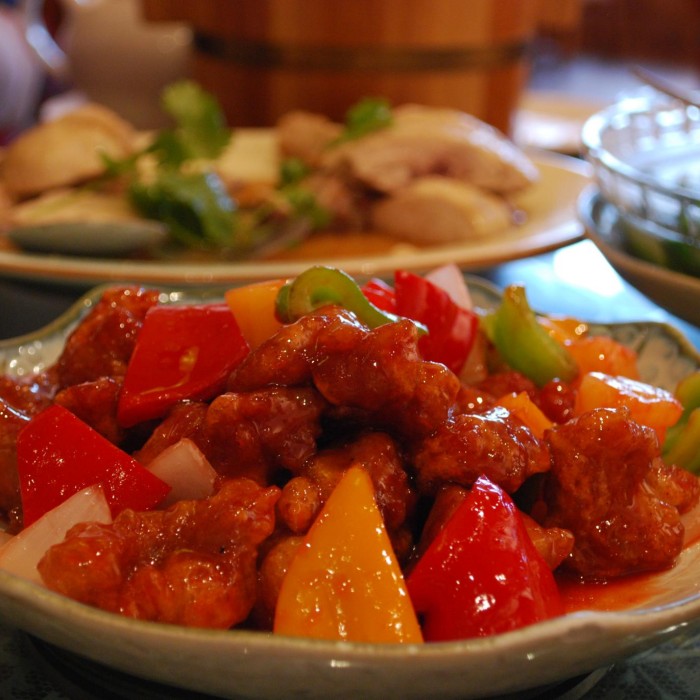
Sweet and Sour Pork

Ingredientes

200g Pork
1 Egg
Dash Water
1/2 tsp Salt
1 tsp Sugar
10g Soy Sauce
10g Starch
30g Tomato Puree
10g Vinegar
Dash Coriander

Instrucciones

Preparation
1. Crack the egg into a bowl. Separate the egg white and yolk.

Sweet and Sour Pork
2. Slice the pork tenderloin into strips.

3. Prepare the marinade using a pinch of salt, one teaspoon of starch, two teaspoons of light soy sauce, and an egg white.

4. Marinade the pork strips for about 20 minutes.

5. Put the remaining starch in a bowl. Add some water and vinegar to make a starchy sauce.

Sweet and Sour Pork
Cooking Instructions
1. Pour the cooking oil into a wok and heat to 190°C (375°F). Add the marinated pork strips and fry them until they turn brown. Remove the cooked pork from the wok and place on a plate.

2. Leave some oil in the wok. Put the tomato sauce and white sugar into the wok, and heat until the oil and sauce are fully combined.

3. Add some water to the wok and thoroughly heat the sweet and sour sauce before adding the pork strips to it.

4. Pour in the starchy sauce. Stir-fry all the ingredients until the pork and sauce are thoroughly mixed together.

5. Serve on a plate and add some coriander for decoration.

Categorías
Beef
Carne de Res
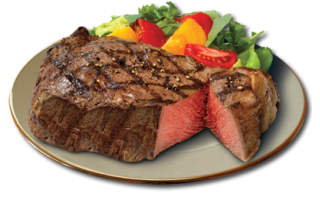
Carne de res es el nombre culinario de la carne de ganado vacuno, particularmente el músculo esquelético. Los humanos han estado comiendo carne de res desde tiempos prehistóricos. La carne de res es una fuente de proteínas y nutrientes de alta calidad. La mayor parte de la carne de músculo esquelético de res se puede usar tal cual simplemente cortándola en ciertas partes, como asados, costillas cortas o bistecs (filete miñón, solomillo, rabadilla, chuleta, ojo de costilla, bistec de falda, etc.), mientras que otros cortes son procesados (carne en salmuera o cecina de res). Los recortes, por otro lado, generalmente se mezclan con carne de ganado más viejo, magro (por lo tanto, más duro), se muelen, se pican o se usan en salchichas. La sangre se usa en algunas variedades llamadas morcilla. Otras partes que se comen incluyen otros músculos y vísceras, como el rabo de buey, el hígado, la lengua, los callos del retículo o rumen, las glándulas (particularmente el páncreas y el timo, conocidos como mollejas), el corazón, el cerebro (aunque prohibido donde existe peligro de encefalopatía espongiforme bovina, EEB, comúnmente conocida como enfermedad de las vacas locas), los riñones y los testículos tiernos del toro (conocidos en los Estados Unidos como sesos de ternera, ostras de la pradera u ostras de las Montañas Rocosas). Algunos intestinos se cocinan y se comen tal cual, pero más a menudo se limpian y se usan como tripas naturales para salchichas. Los huesos se utilizan para hacer caldo de res.