Stamppot

Ingredientes

1.5kg Potatoes
2 leaves Bay Leaf
2 Shallots
3 tbs Butter
750g Kale
2 Sausages
500ml Milk
Grated Nutmeg
Pinch Salt
Pinch Pepper

Instrucciones


Wash and peel the potatoes and cut into similarly sized pieces for even cooking.

In a large soup pot, boil the potatoes and the bay leaves in salted water for 20 minutes. Discard the bay leaves.

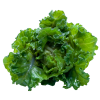
If you're not using a bag of ready-cut curly kale, wash the bunches thoroughly under cool running water to get rid of all soil—you wouldn't want that gritty texture in your finished dish. Trim any coarse stems and discard any brown leaves. With a sharp knife, cut the curly kale into thin strips.

Peel and chop the shallots.

In a frying pan or skillet, melt 1 tbsp. of butter and saute the shallots for a few minutes before adding the curly kale and 2 tbsp. of water. Season and cook for about 10 minutes, or until tender.

Warm the milk on the stove or in the microwave.

Drain, shake and dry the potatoes with kitchen towels before mashing with a potato masher or ricer. Working quickly, add the warm milk and the remaining butter. Season to taste with nutmeg, salt, and pepper.

Mix the cooked curly kale through the cooked mashed potato mixture.

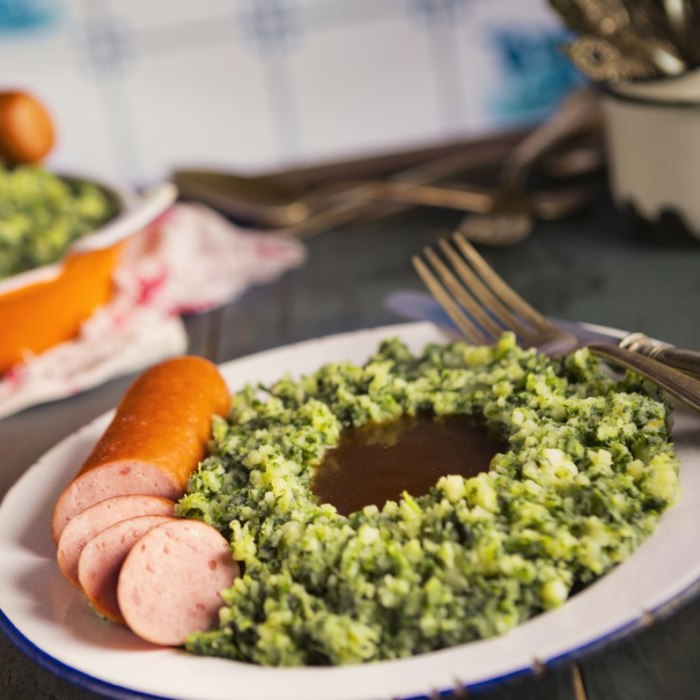
Top with slices of the smoked sausage and serve hot with your favorite mustard or gravy.

Serve and enjoy!

Categorías
Beef
Carne de Res
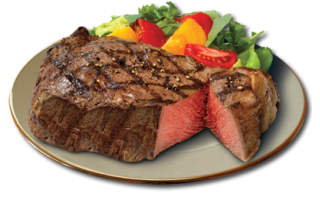
Carne de res es el nombre culinario de la carne de ganado vacuno, particularmente el músculo esquelético. Los humanos han estado comiendo carne de res desde tiempos prehistóricos. La carne de res es una fuente de proteínas y nutrientes de alta calidad. La mayor parte de la carne de músculo esquelético de res se puede usar tal cual simplemente cortándola en ciertas partes, como asados, costillas cortas o bistecs (filete miñón, solomillo, rabadilla, chuleta, ojo de costilla, bistec de falda, etc.), mientras que otros cortes son procesados (carne en salmuera o cecina de res). Los recortes, por otro lado, generalmente se mezclan con carne de ganado más viejo, magro (por lo tanto, más duro), se muelen, se pican o se usan en salchichas. La sangre se usa en algunas variedades llamadas morcilla. Otras partes que se comen incluyen otros músculos y vísceras, como el rabo de buey, el hígado, la lengua, los callos del retículo o rumen, las glándulas (particularmente el páncreas y el timo, conocidos como mollejas), el corazón, el cerebro (aunque prohibido donde existe peligro de encefalopatía espongiforme bovina, EEB, comúnmente conocida como enfermedad de las vacas locas), los riñones y los testículos tiernos del toro (conocidos en los Estados Unidos como sesos de ternera, ostras de la pradera u ostras de las Montañas Rocosas). Algunos intestinos se cocinan y se comen tal cual, pero más a menudo se limpian y se usan como tripas naturales para salchichas. Los huesos se utilizan para hacer caldo de res.