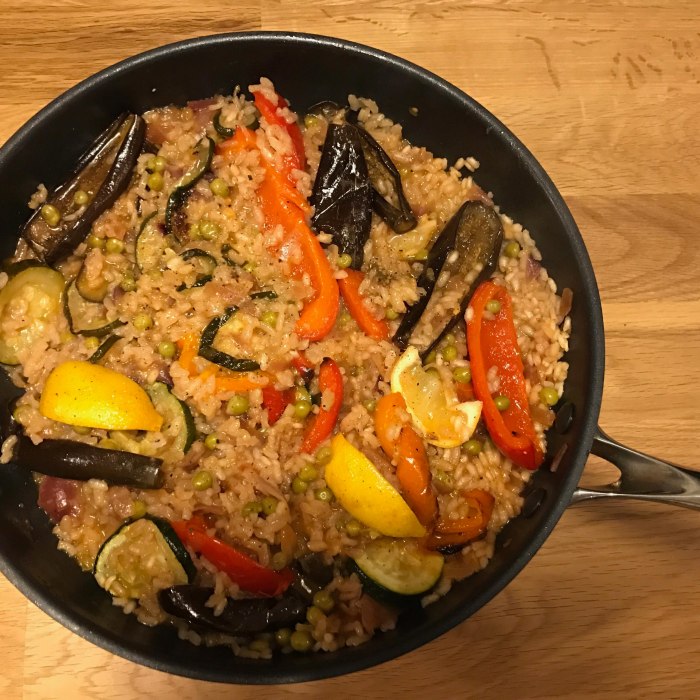
Roast fennel and aubergine paella

Ingredientes

6 small Baby Aubergine
4 small Fennel
1 thinly sliced Red Pepper
1 medium Courgettes
1 finely chopped Onion
300g Paella Rice
1 tsp Paprika
pinch Saffron
200ml White Wine
700ml Vegetable Stock
100g Frozen Peas
1 chopped Lemon
Handful Parsley
pinch Salt
pinch Black Pepper

Instrucciones

1 Put the fennel, aubergine, pepper and courgette in a roasting tray. Add a glug of olive oil, season with salt and pepper and toss around to coat the veggies in the oil. Roast in the oven for 20 minutes, turning a couple of times until the veg are pretty much cooked through and turning golden.

2 Meanwhile, heat a paella pan or large frying pan over a low– medium heat and add a glug of olive oil. Sauté the onion for 8–10 minutes until softened. Increase the heat to medium and stir in the rice, paprika and saffron. Cook for around 1 minute to start toasting the rice, then add the white wine. Reduce by about half before stirring in two-thirds of the stock. Reduce to a simmer and cook for 10 minutes without a lid, stirring a couple of times.

3 Stir in the peas, add some seasoning, then gently mix in the roasted veg. Pour over the remaining stock, arrange the lemon wedges on top and cover with a lid or some aluminium foil. Cook for a further 10 minutes.

4 To ensure you get the classic layer of toasted rice at the bottom of the pan, increase the heat to high until you hear a slight crackle. Remove from the heat and sit for 5 minutes before sprinkling over the parsley and serving.

Categorías
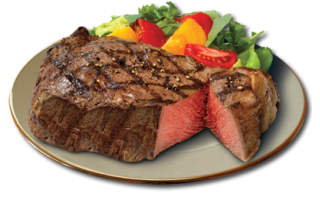
Beef
Carne de Res
Carne de res es el nombre culinario de la carne de ganado vacuno, particularmente el músculo esquelético. Los humanos han estado comiendo carne de res desde tiempos prehistóricos. La carne de res es una fuente de proteínas y nutrientes de alta calidad. La mayor parte de la carne de músculo esquelético de res se puede usar tal cual simplemente cortándola en ciertas partes, como asados, costillas cortas o bistecs (filete miñón, solomillo, rabadilla, chuleta, ojo de costilla, bistec de falda, etc.), mientras que otros cortes son procesados (carne en salmuera o cecina de res). Los recortes, por otro lado, generalmente se mezclan con carne de ganado más viejo, magro (por lo tanto, más duro), se muelen, se pican o se usan en salchichas. La sangre se usa en algunas variedades llamadas morcilla. Otras partes que se comen incluyen otros músculos y vísceras, como el rabo de buey, el hígado, la lengua, los callos del retículo o rumen, las glándulas (particularmente el páncreas y el timo, conocidos como mollejas), el corazón, el cerebro (aunque prohibido donde existe peligro de encefalopatía espongiforme bovina, EEB, comúnmente conocida como enfermedad de las vacas locas), los riñones y los testículos tiernos del toro (conocidos en los Estados Unidos como sesos de ternera, ostras de la pradera u ostras de las Montañas Rocosas). Algunos intestinos se cocinan y se comen tal cual, pero más a menudo se limpian y se usan como tripas naturales para salchichas. Los huesos se utilizan para hacer caldo de res.