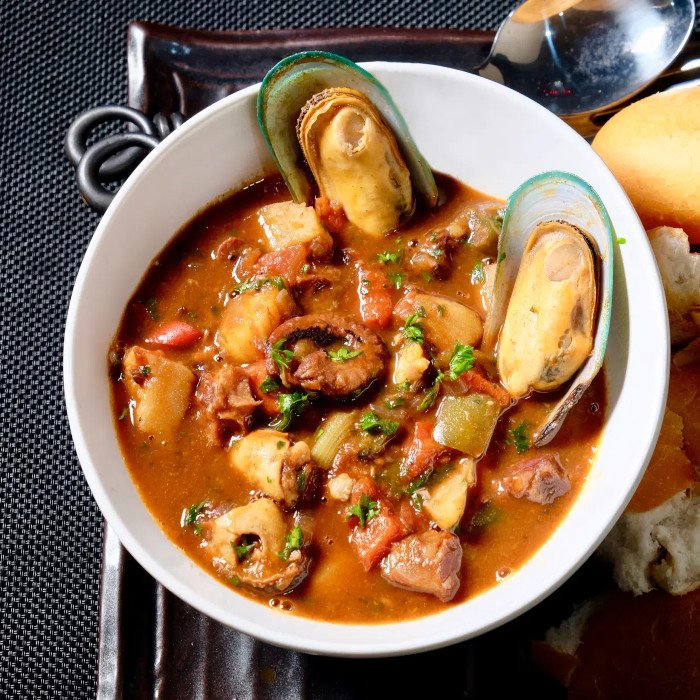
Portuguese fish stew (Caldeirada de peixe)
Ingredientes

2 finely chopped Onions
1 Diced Red Pepper
Small bunch Coriander
1 small Red Chilli
3 cloves Garlic
400ml Dry White Wine
Pinch Saffron
1 Bay Leaf
300g Potatoes
400g Plum Tomatoes
600g Cod
300g Squid
8 Tiger Prawns
500g Clams
500g Mussels
1 sliced Baguette

Instrucciones

STEP 1

Heat a drizzle of oil in a large, deep-sided frying pan, and fry the onion and pepper on a medium heat until softened but not browned. Finely chop the coriander stalks (keep the leaves for later), and add to the pan with the chilli and chopped garlic. Fry for another few minutes. Add the wine, saffron and bay leaf and let it simmer until reduced by half.

STEP 2

Add the potatoes, tomatoes, and 300ml water and bring to a gentle boil. Break up the tomatoes with a spoon on the side of the pan and simmer for 20-25 minutes until the potatoes are just tender, and the tomatoes have broken down.

STEP 3

Season well, then gently push the fish into the sauce, and arrange the squid, prawns, clams and mussels on the surface. Put the lid on and cook for 6-8 minutes until the mussel and clam shells have opened, the prawns are cooked and the fish is flaky. Toast the bread, rub lightly with the halved garlic clove and drizzle with olive oil. Serve the stew scatted with chopped coriander leaves, and the toasts for dunking.

Categorías
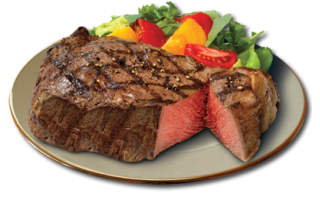
Beef
Carne de Res
Carne de res es el nombre culinario de la carne de ganado vacuno, particularmente el músculo esquelético. Los humanos han estado comiendo carne de res desde tiempos prehistóricos. La carne de res es una fuente de proteínas y nutrientes de alta calidad. La mayor parte de la carne de músculo esquelético de res se puede usar tal cual simplemente cortándola en ciertas partes, como asados, costillas cortas o bistecs (filete miñón, solomillo, rabadilla, chuleta, ojo de costilla, bistec de falda, etc.), mientras que otros cortes son procesados (carne en salmuera o cecina de res). Los recortes, por otro lado, generalmente se mezclan con carne de ganado más viejo, magro (por lo tanto, más duro), se muelen, se pican o se usan en salchichas. La sangre se usa en algunas variedades llamadas morcilla. Otras partes que se comen incluyen otros músculos y vísceras, como el rabo de buey, el hígado, la lengua, los callos del retículo o rumen, las glándulas (particularmente el páncreas y el timo, conocidos como mollejas), el corazón, el cerebro (aunque prohibido donde existe peligro de encefalopatía espongiforme bovina, EEB, comúnmente conocida como enfermedad de las vacas locas), los riñones y los testículos tiernos del toro (conocidos en los Estados Unidos como sesos de ternera, ostras de la pradera u ostras de las Montañas Rocosas). Algunos intestinos se cocinan y se comen tal cual, pero más a menudo se limpian y se usan como tripas naturales para salchichas. Los huesos se utilizan para hacer caldo de res.