Calculadora de IMC
 Calculadora de Calorías
 Calculadora de Porcentaje de Grasa Corporal
 Calculadora de TMB
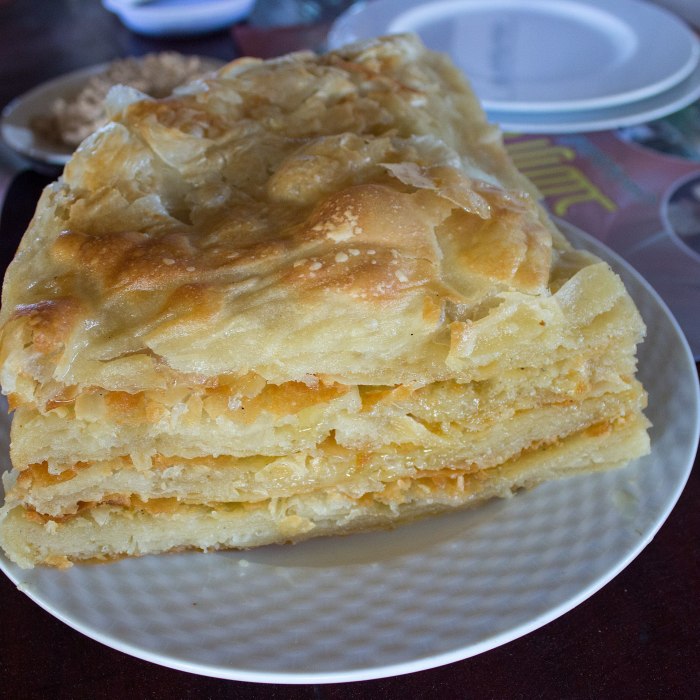
Feteer Meshaltet
Ingredientes


Instrucciones
Mix the flour and salt then pour one cup of water and start kneading.
If you feel the dough is still not coming together or too dry, gradually add the remaining water until you get a dough that is very elastic so that when you pull it and it won’t be torn.
Let the dough rest for just 10 minutes then divide the dough into 6-8 balls depending on the size you want for your feteer.
Warm up the butter/ghee or oil you are using and pour into a deep bowl.
Immerse the dough balls into the warm butter. Let it rest for 15 to 20 minutes.
Preheat oven to 550F.
Stretch the first ball with your hands on a clean countertop. Stretch it as thin as you can, the goal here is to see your countertop through the dough.
Fold the dough over itself to form a square brushing in between folds with the butter mixture.
Set aside and start making the next ball.
Stretch the second one thin as we have done for the first ball.
Place the previous one on the middle seam side down. Fold the outer one over brushing with more butter mixture as you fold. Set aside.
Keep doing this for the third and fourth balls. Now we have one ready, place on a 10 inch baking/pie dish seam side down and brush the top with more butter.
Repeat for the remaining 4 balls to make a second one. With your hands lightly press the folded feteer to spread it on the baking dish.
Place in preheated oven for 10 minutes when the feteer starts puffing turn on the broiler to brown the top.
When it is done add little butter on top and cover so it won’t get dry.
Categorías