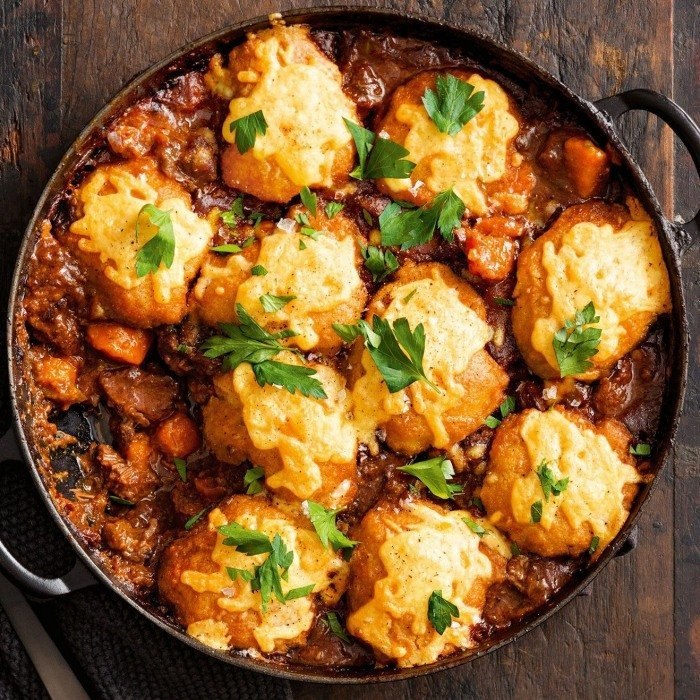
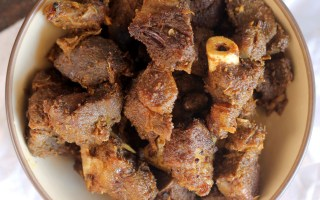
Beef Dumpling Stew

Ingredientes

2 tbs Olive Oil
25g Butter
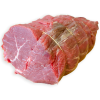
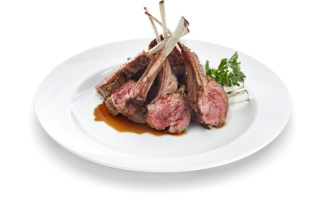
750g Beef
2 tblsp Plain Flour
2 cloves minced Garlic
175g Onions
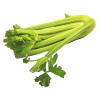
150g Celery
150g Carrots
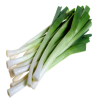
2 chopped Leek
200g Swede
150ml Red Wine
500g Beef Stock
2 Bay Leaf
3 tbs Thyme
3 tblsp chopped Parsley
125g Plain Flour
1 tsp Baking Powder
60g Suet
Splash Water

Instrucciones

Preheat the oven to 180C/350F/Gas 4.

For the beef stew, heat the oil and butter in an ovenproof casserole and fry the beef until browned on all sides.

Sprinkle over the flour and cook for a further 2-3 minutes.

Add the garlic and all the vegetables and fry for 1-2 minutes.

Stir in the wine, stock and herbs, then add the Worcestershire sauce and balsamic vinegar, to taste. Season with salt and freshly ground black pepper.

Cover with a lid, transfer to the oven and cook for about two hours, or until the meat is tender.

For the dumplings, sift the flour, baking powder and salt into a bowl.
Add the suet and enough water to form a thick dough.

With floured hands, roll spoonfuls of the dough into small balls.

After two hours, remove the lid from the stew and place the balls on top of the stew. Cover, return to the oven and cook for a further 20 minutes, or until the dumplings have swollen and are tender. (If you prefer your dumplings with a golden top, leave the lid off when returning to the oven.)

To serve, place a spoonful of mashed potato onto each of four serving plates and top with the stew and dumplings. Sprinkle with chopped parsley.

Categorías
Beef
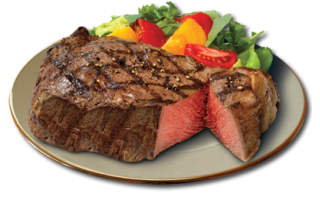
Carne de Res
Carne de res es el nombre culinario de la carne de ganado vacuno, particularmente el músculo esquelético. Los humanos han estado comiendo carne de res desde tiempos prehistóricos. La carne de res es una fuente de proteínas y nutrientes de alta calidad. La mayor parte de la carne de músculo esquelético de res se puede usar tal cual simplemente cortándola en ciertas partes, como asados, costillas cortas o bistecs (filete miñón, solomillo, rabadilla, chuleta, ojo de costilla, bistec de falda, etc.), mientras que otros cortes son procesados (carne en salmuera o cecina de res). Los recortes, por otro lado, generalmente se mezclan con carne de ganado más viejo, magro (por lo tanto, más duro), se muelen, se pican o se usan en salchichas. La sangre se usa en algunas variedades llamadas morcilla. Otras partes que se comen incluyen otros músculos y vísceras, como el rabo de buey, el hígado, la lengua, los callos del retículo o rumen, las glándulas (particularmente el páncreas y el timo, conocidos como mollejas), el corazón, el cerebro (aunque prohibido donde existe peligro de encefalopatía espongiforme bovina, EEB, comúnmente conocida como enfermedad de las vacas locas), los riñones y los testículos tiernos del toro (conocidos en los Estados Unidos como sesos de ternera, ostras de la pradera u ostras de las Montañas Rocosas). Algunos intestinos se cocinan y se comen tal cual, pero más a menudo se limpian y se usan como tripas naturales para salchichas. Los huesos se utilizan para hacer caldo de res.